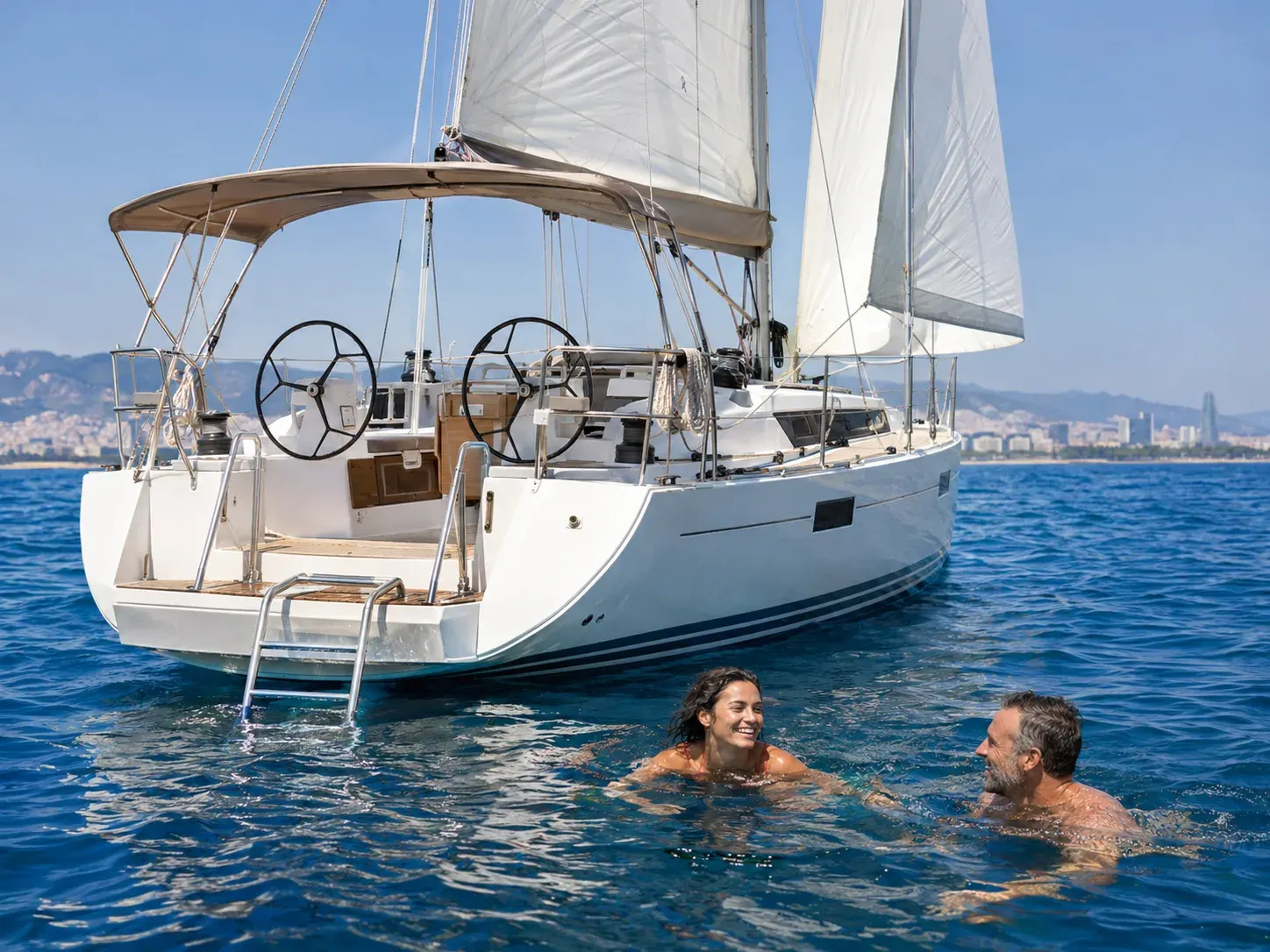
 Shared · Daytime
Midday shared sailing
Book seats and share the boat with other travellers. 2 hours on the water from Port Vell.
- Duration
- 2 hours
€52per adult
Under sail · Port Vell
In short
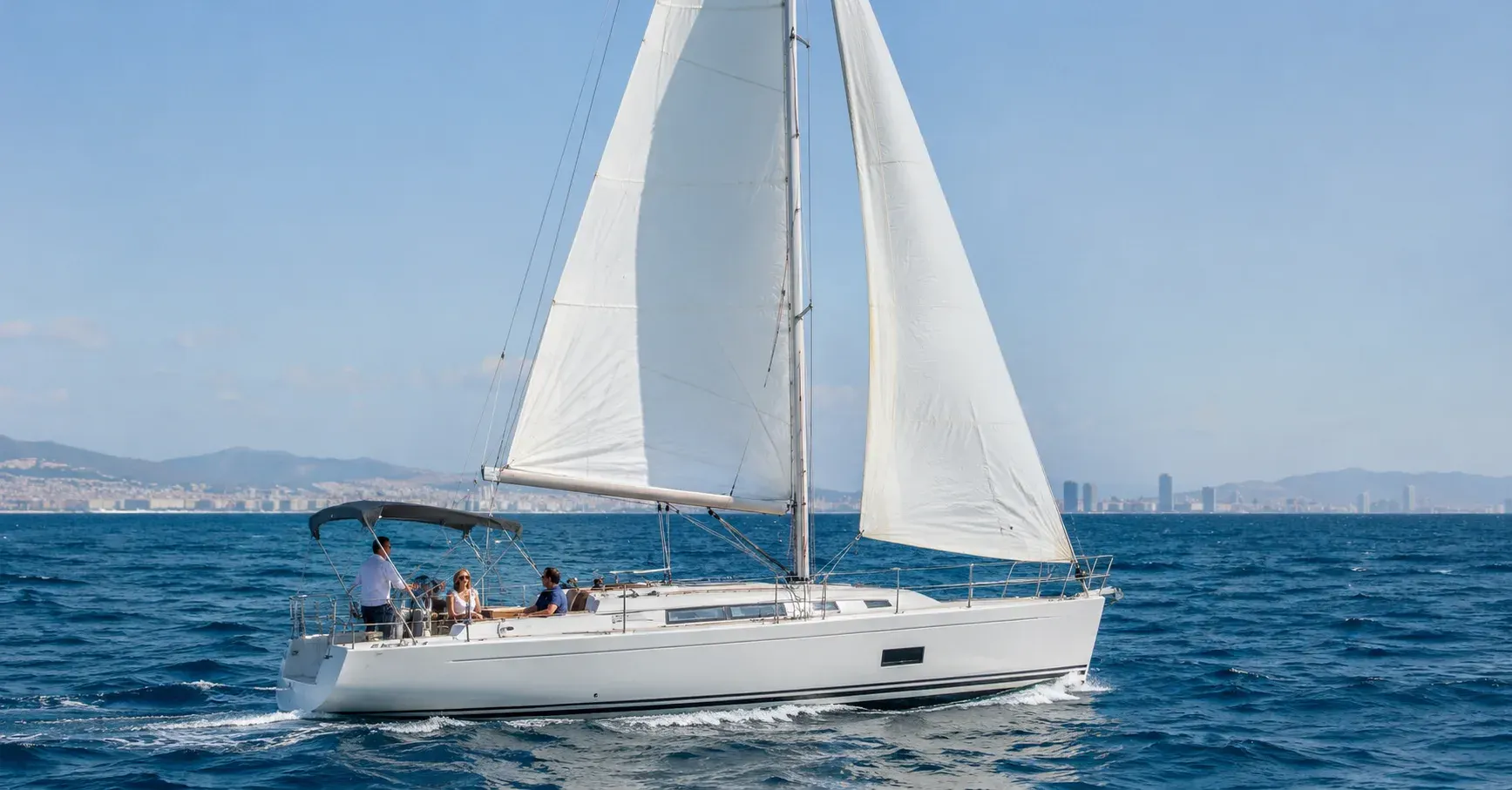
A Barcelona sailing tour takes you out of Port Vell on a skippered sailing boat that moves with the wind instead of an engine. Once the sails are up the boat goes quiet and leans gently along the coast. You need no experience. Shared two-hour sails start at €52 per adult; ask on WhatsApp for times.
Last reviewed
 Shared · Daytime
Book seats and share the boat with other travellers. 2 hours on the water from Port Vell.
€52per adult
 Shared · Evening
Book seats and share the boat with other travellers. 2 hours on the water from Port Vell.
€79per adult
 Shared · Early morning
Book seats and share the boat with other travellers. 2 hours on the water from Port Vell.
€105per adult
 Private · Daytime
The whole boat for your group only, with a skipper. 2 hours on the water from Port Vell.
€479per boat
 Private · Evening
The whole boat for your group only, with a skipper. 2 hours on the water from Port Vell.
€639per boat
 Private · Early morning
The whole boat for your group only, with a skipper. 2 hours on the water from Port Vell.
Private · DaytimeThe whole boat for your group only, with a skipper. 4 hours on the water from Port Vell.
€799per boat
Private · EveningThe whole boat for your group only, with a skipper. 3 hours on the water from Port Vell.
€799per boat
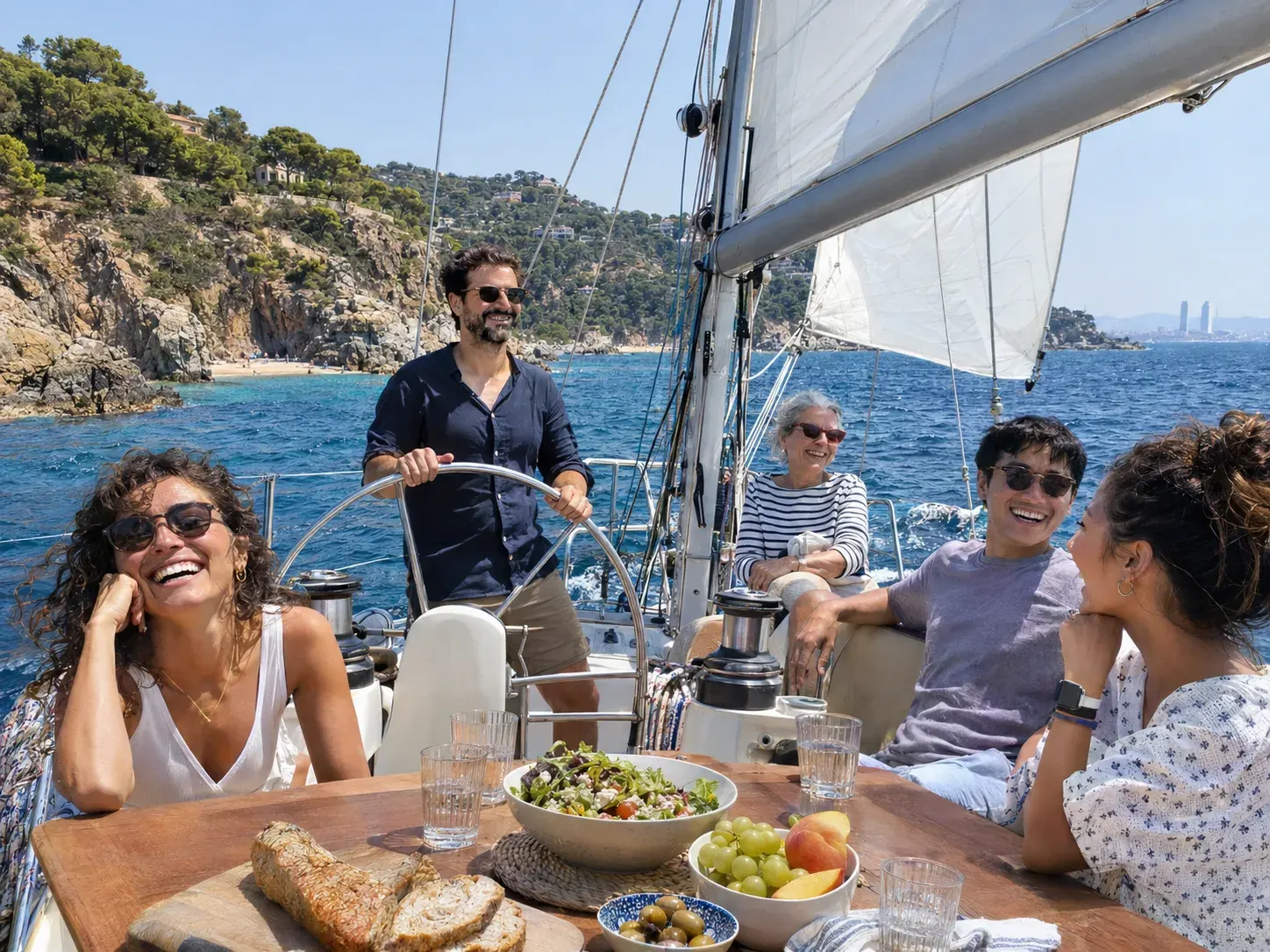 Private · All day
The whole boat for your group only, with a skipper. 8 hours on the water from Port Vell.
€2,000per boat
Prices in euros: shared trips per adult, private trips per boat. Book online with secure card payment, or ask us on WhatsApp first. Child prices and your exact departure time are confirmed in writing; a WhatsApp message on its own does not book or charge anything.
Most boats in a busy harbour run on diesel. Ours sail on the wind. A Barcelona sailing tour with us usually leaves Port Vell under engine, and once there is open water and enough breeze the skipper raises the sails, cuts the motor and lets the breeze do the work. The noise drops away, the deck tilts a few degrees and the city starts to slide past.
This page is about the sailing itself: what it feels like, how the wind shapes the trip and why a Barcelona sailing tour suits people who have never set foot on a yacht.
Speed is not the point of sailing. A sailboat tour in Barcelona moves at the pace the wind allows, which along this coast is usually easy and unhurried. What you gain is the feeling of the sea itself.
A sailing boat has a mast, a large mainsail behind it and usually a smaller sail at the front, called the headsail or jib. Under the water a heavy keel acts as a counterweight, which is why a sailing boat can lean with the wind and stay stable. Around the back of the boat is the cockpit, the sunken seating area where guests usually sit, close to the wheel and the skipper.
Decks are smooth and can be slippery when wet, so flat, soft-soled shoes matter more than on most boats. Space is laid out carefully, and the skipper will show you where to sit and which ropes to keep clear of.
Wind decides a great deal on a sailing boat: the direction of the route, the speed and how much the boat leans. That is why we never promise a fixed itinerary.
When the wind fills the sails, the boat heels, tilting to one side. For a first-timer it can feel dramatic for about a minute. Then it simply feels like sailing. The skipper controls the angle by easing the sails or changing course, and can keep the boat flatter for anyone who is uneasy.
A sailing boat cannot sail straight into the wind. To go upwind it zigzags, turning its bow through the wind in a manoeuvre called a tack. You will hear the skipper call it, the sails will swing across, and the lean switches to the other side. Duck your head and enjoy the change of view.
On many warm days a sea breeze builds through the late morning and afternoon as the land heats up; locals call it the marinada. It tends to ease towards evening, which is one reason sunset sails often feel gentle. Winter can bring clear, crisp days with stronger winds from the north, and the occasional flat calm. For more on what to expect month by month, read our sailing weather guide for Barcelona.
Good to know: If the wind drops to nothing, the skipper can motor so the trip keeps moving. If it blows too hard to be safe or pleasant, the skipper may change the route or the plan. Either way we keep you informed on WhatsApp.
You do not need to know anything about sailing to join a Barcelona sailing tour. The skipper handles every manoeuvre, decides the route and gives a short safety briefing before you leave the berth, including where the life jackets are stowed.
If you are curious, ask questions. When conditions allow and the skipper agrees, you may be able to help hoist a sail or hold the helm for a while with the skipper beside you. If you would rather lie back with your sunglasses on, that is just as welcome. Our notes on sailing in Barcelona with no experience and the first-timer’s guide cover the common worries, from seasickness to what to wear.
Every trip depends on the wind, the sea and the skipper’s plan, so read this as the usual rhythm rather than a timetable.
The sailing is the same; the light and the mood are not.
| Sailing | What it feels like | Learn more |
|---|---|---|
| Sunrise | Calm water, an empty horizon, the sun rising out of the sea | Early-morning sailing |
| Midday | Bright sun, the breeze building, swimming weather in season | Sailing in the middle of the day |
| Sunset | Golden light, softer wind, the city lights coming on | An evening under sail |
You can join a shared sailing cruise in Barcelona and book only the seats you need, which suits couples and solo travellers; our page on joining a shared sailing trip explains how it works. Or keep the boat for your own group with a private sailing trip, where the skipper can take your wishes into account when planning the route.
Skippers use a handful of words you will hear on almost every trip. Knowing them makes the briefing easier to follow and the manoeuvres easier to enjoy.
| Word | What it means |
|---|---|
| Bow and stern | The front and the back of the boat |
| Port and starboard | Left and right when you face the bow |
| Helm | The wheel or tiller used to steer |
| Mainsail and jib | The big sail behind the mast and the smaller one in front |
| Boom | The horizontal pole along the bottom of the mainsail; keep your head clear of it |
| Winch | The drum used to pull in a rope under load |
| Heel | The lean of the boat when the wind fills the sails |
| Tack | Turning the bow through the wind to change direction |
The one to remember is boom. When the skipper calls a tack or a turn, the boom swings across the cockpit, so stay seated and keep your head low until it settles.
A few small habits make a sail safer and more comfortable for everyone on deck.
Most people take to it quickly, but a few honest notes help you decide. Getting on and off a sailing boat usually involves a step across from the quay or pontoon, and moving around a deck that may tilt, so tell us in advance if anyone in your group has limited mobility and we will say plainly whether the trip is a good fit. If you are prone to seasickness, a morning or evening sail is often gentler than a windy afternoon. And if you simply want to sit and watch the coast, that is exactly what you can do on sailing tours in Barcelona: the skipper does the work.
Our prices are on each tour page: a shared two-hour sail costs from €52 per adult, and a private boat from €479 for two hours. Departure times change with the season, so when you message us, we confirm in writing:
Meeting point
08039 Barcelona · Ciutat Vella · in front of the Palau de Mar, Port Vell
FAQ
Not covered here? Send us a WhatsApp message and we will answer directly.
Often, yes, or you will be asked to wear clean, soft, non-marking soles. Sailing decks get wet and slippery, and hard or dark soles grip badly and can mark the surface. Wear flat shoes you can slip off easily and bring a small bag to keep them in. The skipper tells you the house rule when you step aboard.
A sailing boat leans, or heels, when the wind fills the sails. On a normal day along the Barcelona coast that usually means a gentle tilt that feels odd for a minute and then natural. The skipper controls how much the boat heels by adjusting the sails and the course, and will happily keep it flatter if anyone on board is nervous.
If you would like to, ask the skipper on the day. When conditions allow and the skipper agrees, you may be able to pull a rope as the sails go up or hold the helm for a while with the skipper beside you. It is never required. You can just as happily sit on deck and watch the city go past.
On a calm day the skipper can use the engine to keep the trip moving, and the sea is usually very smooth, which suits anyone who worries about motion. When the breeze returns, the sails go back up. The route and pace always depend on wind and sea on the day, which is part of sailing.
Yes, you do not need to swim to go sailing. You stay on board for the trip, the skipper sails the boat and explains where the life jackets are kept during the safety briefing. Tell us when you book that someone in your group does not swim, so the skipper knows in advance, and simply stay on deck if a swim stop happens.
Book direct · Barcelona
Send a WhatsApp message with your date, the number of guests and the time of day you like. We answer with what is available, the price, the timing and what is included, in writing, before you confirm.

