On this page · 8 sections
Most people who step onto a sailing boat in Barcelona have never done it before, and almost all of them arrive with the same small worries: will it tip, will I feel sick, will I be in the way. This guide walks you through your first time sailing in Barcelona, from the moment you reach the pontoon to the moment you step back onto dry land, so nothing on the day comes as a surprise.
You do not need any skills. The skipper sails the boat, and your only job is to enjoy it.
Before your first sailing trip: reaching the boat
Your trip starts at Port Vell, the old harbour at the bottom of La Rambla. The meeting point is Plaça de Pau Vila, 39, in front of the Palau de Mar building on the Barceloneta side, and the exact berth for your boat is sent to you on WhatsApp when you book. Our meeting point guide explains how to recognise the square and how early to arrive.
Give yourself a margin. Metro L4 to Barceloneta is a short walk away, but finding a pontoon in an unfamiliar marina always takes longer than you expect. Arriving relaxed makes the first ten minutes on board far more pleasant.
What to wear for a first sail
Choose soft-soled shoes that grip on a wet surface, such as trainers or deck shoes, and leave heels and hard leather soles at the hotel. Pack one more layer than seems necessary, because the sea breeze always feels cooler than the air in the city. Our guide on what to wear on a boat tour covers every season.
What to expect on a sailing trip: the first fifteen minutes
Stepping aboard
A sailing boat in a marina is usually moored stern-to, meaning its back end faces the quay. You step across from the pontoon, sometimes via a short gangway, sometimes with a long stride. The skipper will usually offer a hand. Take it, and step onto the boat rather than jumping. Keep one hand free for holding on.
If you want one line on what to expect on a sailing trip, it is this: the boat will move a little under your feet, even in the harbour. That slight sway is the first thing first-timers notice, and it stops feeling strange within minutes.
The safety talk
Before leaving the berth, the skipper gives a short safety briefing. Expect to hear where the life jackets are kept, where you can and cannot sit, how to move around the deck, and what to do if you need help. Listen even if it feels routine. It is short, and it is the best way to understand how the boat works. Our safety guide explains what a good briefing covers.
Motoring out
Sailing boats almost always leave the marina under engine. You hear a low diesel hum and move slowly past the moored yachts and out through the harbour entrance. This calm stretch is a good moment to take photos of the waterfront and settle into your seat.
The moment the sails go up
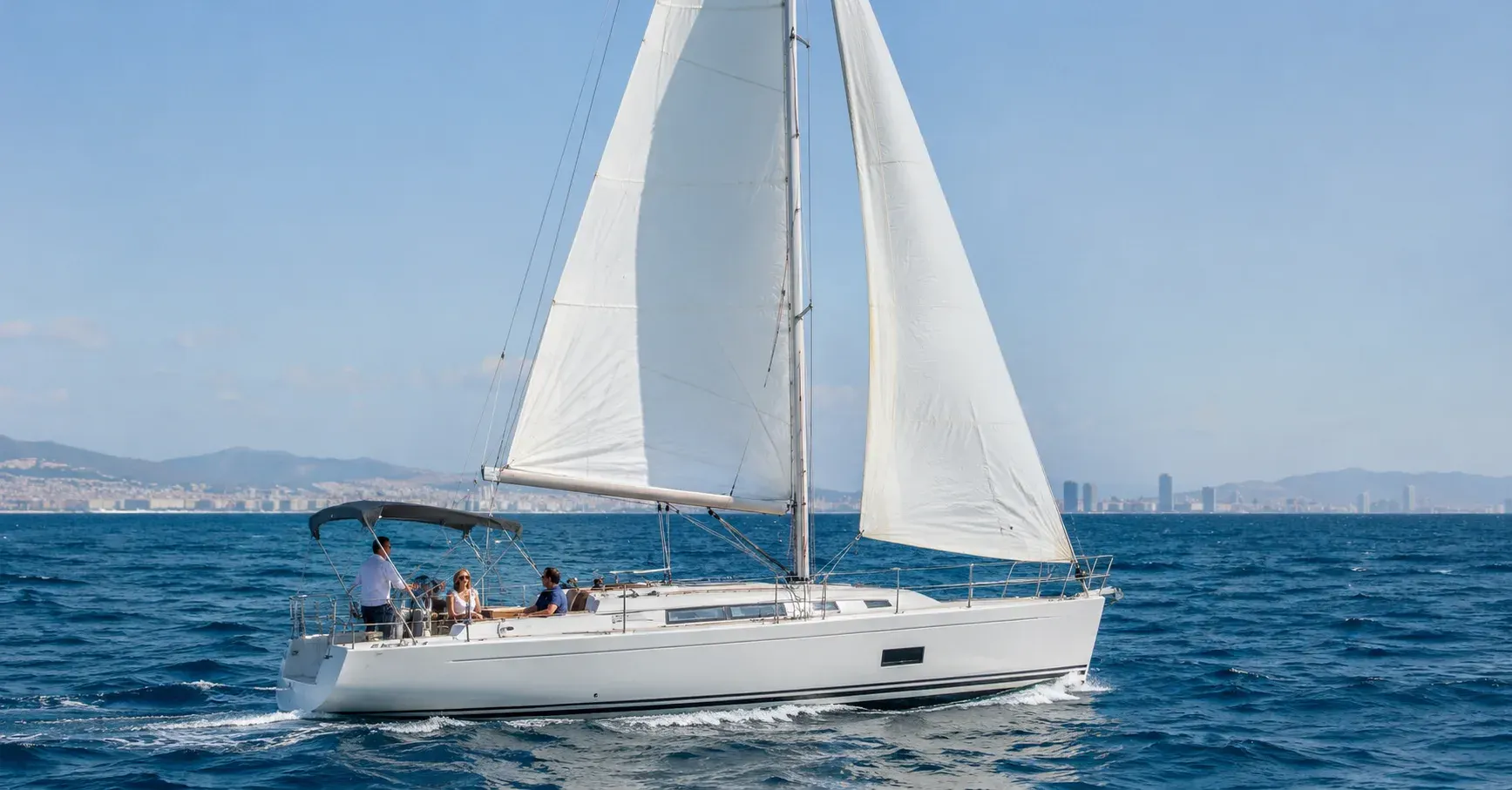
Once the boat reaches open water, the sails go up and the engine falls silent. For many people this is the highlight of their first sailing trip: the noise drops away and the boat starts moving with the wind alone.
Heeling: why the boat leans
As the sails fill, the boat tilts to one side. This lean is called heeling, and it is completely normal. The weight of the keel, deep under the hull, pulls the boat back upright, which is why a sailing yacht leans but does not tip over in normal sailing conditions.
How much it leans depends on the wind and how the skipper sets the sails. On a light day you may barely notice it. In a fresh afternoon breeze the low side of the deck can sit close to the water. If that makes you uneasy, say so: the skipper can ease the sails and the boat will sit flatter.
The sounds of a sailing boat
A sailing yacht is quiet, but it is not silent, and the noises can startle a first-timer. Here is what they usually mean:
| Sound | What it is |
|---|---|
| A rapid clicking | A winch being turned to tighten a rope |
| Loud flapping | The sails changing sides during a turn, briefly empty of wind |
| Creaking | Ropes and fittings taking the strain, as designed |
| Rushing or slapping water | The hull moving through small waves |
| A sharp call from the skipper | A turn is coming, usually with a word like “tacking” |
None of these is a sign that anything is wrong.
Where to sit and how to move
On a first sail, the safest and most comfortable places are usually the cockpit (the sunken seating area near the steering wheel) and the high side of the boat when it heels. The skipper will tell you which areas to keep clear, especially near the ropes and winches.
Watch out for the boom, the horizontal pole along the bottom of the main sail. When the boat turns it swings across the deck, which is why the skipper calls out before every manoeuvre. Keep your head below it unless told otherwise.
When you move around, follow the old sailors’ rule: one hand for you, one hand for the boat. Move slowly, stay low, and hold something solid.
Can you help sail?
If you would like to try, ask. Depending on conditions, the skipper may let you take the wheel for a while or help pull in a rope. It is entirely optional. Our page on sailing without experience explains what guests can usually try.
The toilet on a yacht
This is the question many first-timers are too shy to ask. Many sailing yachts have a small marine toilet, known on board as the head. It is compact, sits below deck, and is flushed with a hand pump or a button. Marine toilets block easily, so the rule is simple: follow the skipper’s instructions exactly and put nothing in it that is not meant to go there.
Whether the boat for your trip has a toilet is confirmed on WhatsApp when you book. Either way, using the facilities ashore before boarding is a good habit, as going below deck while the boat is moving is the moment some people start to feel queasy.
Dealing with nerves on a first sail
Feeling anxious before you sail for the first time is common, and it nearly always fades once the boat is moving. A few things help:
- Watch the horizon. A fixed point steadies both your balance and your stomach.
- Stay on deck in the fresh air rather than going below.
- Talk to the skipper. Ask what they are doing and why. Understanding the boat makes it feel predictable.
- Choose a calmer slot. Mornings are often gentler than afternoons, when the sea breeze tends to build.
If you are prone to motion sickness, read our seasickness guide before the day. It covers where to sit and what to do before you board.
Coming back to the harbour
The sails come down outside the port and the boat motors back to its berth. The skipper may ask everyone to stay seated while they moor, as this is the busiest moment for the skipper. Wait to be told before stepping off, and keep a hand free once again.
Some guests feel a faint rocking sensation for an hour or so after landing. It is called land sickness, it is harmless, and it passes on its own.
Planning your first time sailing in Barcelona
If this is your first time sailing in Barcelona, a shared trip is a relaxed way to start, as you are among other guests and can simply watch and learn. A private boat suits groups who want the pace set around them. Our sailing tours page explains the options, and the first yacht trip checklist takes you step by step from booking to the morning of the trip.
Prices, timings and what is included vary by date and format, so we confirm them in writing before you pay.