On this page · 6 sections
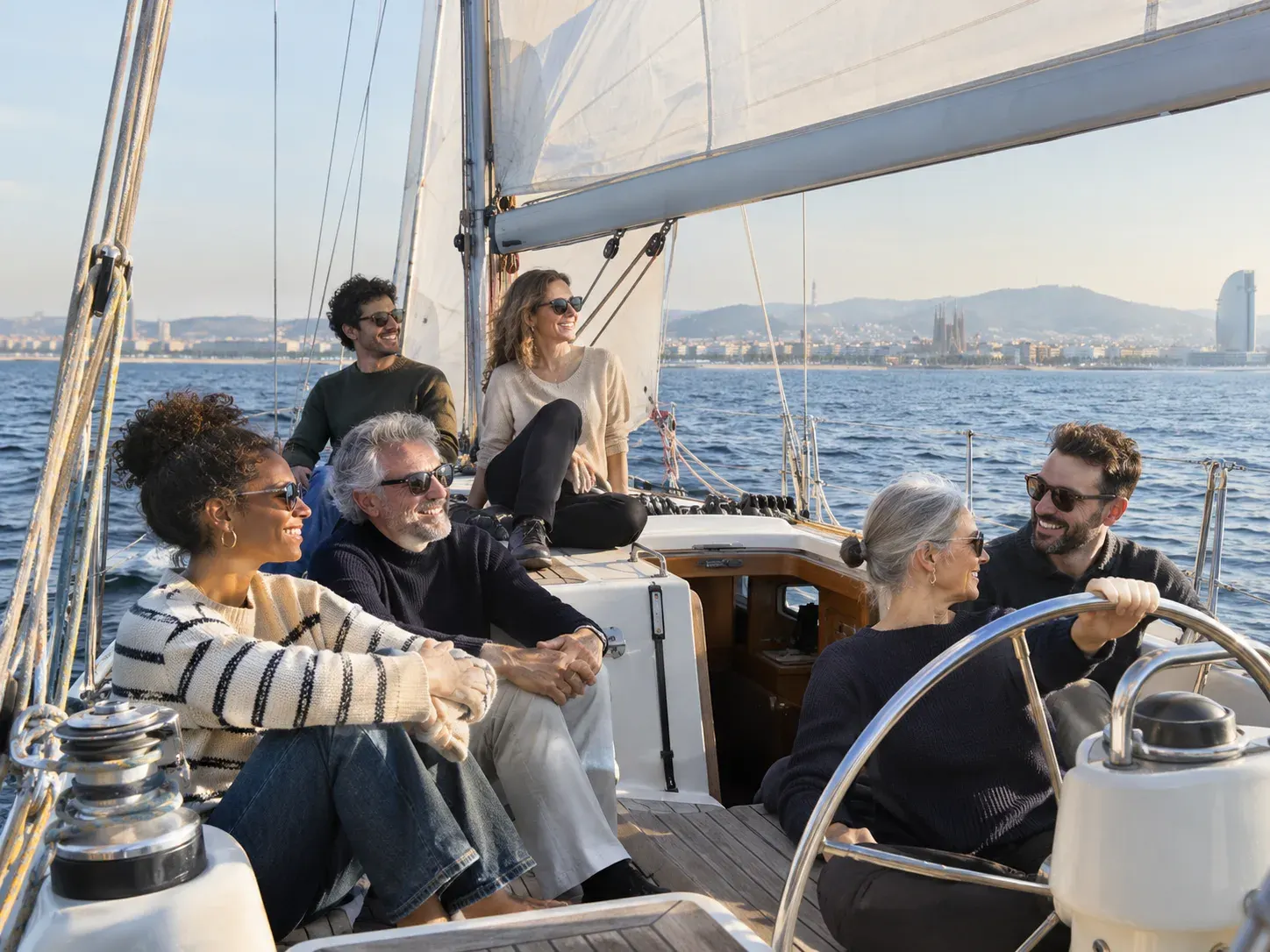
Barcelona is squeezed between the sea and a ridge of hills, with a river at each end and the hill of Montjuïc rising beside the port. From the streets you rarely see more than a block or two at a time. A mile or so offshore, the Barcelona skyline from the sea suddenly makes sense: the city lays itself out in layers, from the harbour at your feet to the hills on the horizon.
This guide reads the view the way you will see it from a boat, from left to right, so you can put names to the shapes.
Why the view of Barcelona from the water is different
On land, the best-known viewpoints, such as the Bunkers del Carmel or the top of Montjuïc, look down on the city from inside it. From the water you look back at Barcelona from outside. You see its whole width at once, and you see how the grid of the Eixample, the old town and the waterfront fit together between the hills.
The geography helps. The shore faces roughly south-east, so from a boat you look back towards the north-west. Montjuïc sits on your left, the river Besòs on your right, and the Collserola ridge closes the view behind. If you want a list of the buildings themselves, our guide to landmarks from the sea goes building by building. This page is about the panorama as a whole.
The Barcelona panorama from the water, left to right
Assume the boat is offshore from Barceloneta, facing the city. Here is what the Barcelona panorama from the water typically contains, working from left to right.
1. Montjuïc and the port
On the far left, Montjuïc rises steeply from the sea. Look for the low walls of Montjuïc Castle on the summit and the green slopes below it. At its foot, the commercial port spreads out with lines of tall cranes and, often, a cruise ship or two moored at the terminals. On some days you may also see the cars of the port cable car crossing high above the water between Montjuïc and Barceloneta.
2. Port Vell and the Columbus column
Moving right, the cranes give way to the old harbour. The thin column of the Mirador de Colom stands at the foot of La Rambla, with Columbus on top pointing out to sea. Close to the water you may make out the long sheds of the Drassanes, the medieval shipyards, and the cable car towers of Torre Jaume I and Torre Sant Sebastià. Our short history of Barcelona’s harbour and seafaring explains how this stretch of waterfront grew.
3. The old town and Barceloneta
In the centre-left, the dense roofs of the Ciutat Vella step back from the waterfront. The Gothic quarter and El Born are mostly hidden behind the buildings on the quay, but on a clear day you might pick out church towers above the rooftops. In front, the triangular neighbourhood of Barceloneta runs out towards the harbour mouth, with the sail-shaped W Barcelona hotel at its tip.
4. The Eixample and the Sagrada Família
Behind the old town, the flatter blocks of the Eixample stretch inland towards the hills. Roughly in the middle of the view, the spires of the Sagrada Família rise above everything around them. They are a few kilometres from the shore, so haze can soften them, but on crisp days they are unmistakable.
5. Port Olímpic and the modern waterfront
To the right of centre, the twin towers of Port Olímpic, Hotel Arts and Torre Mapfre, rise straight from the beach. At their feet is Frank Gehry’s golden fish sculpture. Further inland and to the right, the bullet-shaped Torre Glòries marks the edge of the 22@ district in Poblenou.
6. Poblenou to the Fòrum
On the far right, the beaches continue past lower apartment blocks to the Fòrum, where the big solar pergola sits on the shore. Beyond it, the three chimneys of the old Sant Adrià power station stand near the mouth of the Besòs, closing the city’s side of the view.
7. Collserola and Tibidabo
Behind everything runs the wooded Collserola ridge. Look for Tibidabo, its highest point, crowned by the church of the Sagrat Cor, and the slim Torre de Collserola communications tower a little to one side. On a clear winter morning the ridge can look close enough to touch.
Good to know: What you see depends on the route, the distance offshore and the clarity of the air. The skipper sets the course according to wind and sea, so no particular viewpoint is promised. We confirm the type of trip and timing on WhatsApp when you book.
How light changes the Barcelona skyline view from a boat
The Barcelona skyline from the sea looks very different through the day, and that matters when you choose a time to sail.
| Time of day | What the skyline looks like | Best for |
|---|---|---|
| Morning | Sun from the east lights the city front-on; colours look natural | Identifying buildings and reading the layers |
| Midday | High, hard light; summer haze can flatten the distance | Bright sea, warmest sailing in summer |
| Late afternoon | Warmer light, longer shadows across the facades | Photographs with depth |
| Sunset | The sun drops behind Montjuïc in winter or the Collserola hills in summer; the city becomes a silhouette | Mood, colour in the sky |
| After dusk | The waterfront lights come on and reflect on the water | Night views of the harbour |
If you want to see the golden hour on the skyline, a sunset cruise is built around that window. For a view that shows every building clearly, a morning or late afternoon sail often works better. For the low evening light itself, our sunset photography guide has practical tips. The skyline view from a boat is usually clearest in the cooler months, when there is less heat haze over the city.
Seasons and visibility for the skyline from a boat
Clear air makes all the difference to how far you see. In summer, heat and humidity often create a soft haze that blurs the hills and the more distant spires. After rain, or when a dry wind blows down from the north-west, the air turns sharp and the whole panorama comes into focus. Autumn and winter are often good for this, with lower sun that picks out the texture of the city.
Wind also shapes the view. On a breezy day the boat heels and changes tack, so the skyline swings from one side to the other. Ask the skipper where to sit; they know where the view will be on each leg.
Photographing the skyline from a boat
- Brace yourself. Lean against the boat or sit down rather than standing free; the deck moves more than you expect.
- Keep the horizon level. A tilted sea is the most common mistake in boat photos.
- Use a moderate zoom. The Sagrada Família and Tibidabo are distant, so a little zoom brings them out from the rooftops.
- Shoot wide too. A wide frame shows the whole curve of the coast between Montjuïc and the Fòrum.
- Turn around. At sunset the sky opposite the sun can be the prettiest part of the scene.
Our photography tips for boat tours go further into settings and protecting your gear from spray. If you would rather see the city from dry land too, compare the experience with our list of waterfront viewpoints.
Seeing the skyline for yourself
Any sail out of Port Vell will give you some version of the Barcelona skyline from the sea, but the time of day and the length of the trip change what you notice. Tell us on WhatsApp whether you care most about clear views, sunset colour or photographs, and we will suggest the option that fits. We reply with the timing, the price, what is included and the cancellation terms in writing before you confirm.