On this page · 7 sections
Seeing Barcelona from the water is a privilege, and the sea in front of the city is a living place rather than a backdrop. For visitors, sustainable sailing in Barcelona comes down to two things: letting the wind do the work, and keeping everything that comes on board on board. This guide explains why sailing is a lower-impact way to be at sea, the habits that make a real difference, and the Mediterranean life you may notice along the way.
We do not claim any eco label or certification. What follows is plain, practical sense that every guest can act on.
Why sustainable sailing starts with the wind
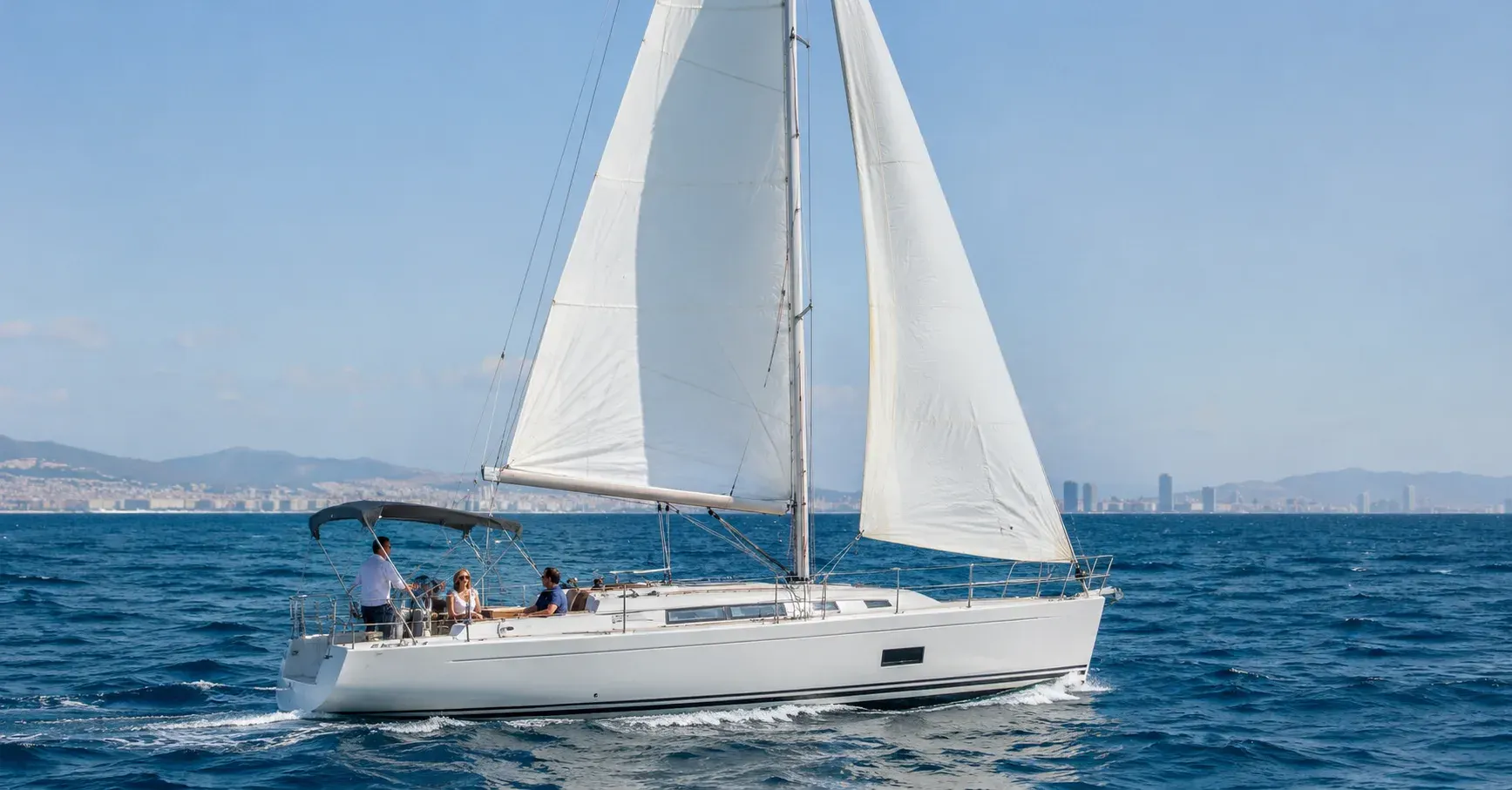
A sailing boat carries an engine, and it is used for the slow, precise work of leaving the berth and passing through the harbour entrance at Port Vell. Once there is open water and a breeze, the sails go up and the engine can be switched off. From then on the boat moves on wind power alone.
That has three clear benefits:
- Less fuel burned, because the engine runs only for part of the trip.
- Less noise, both for you and for anything living under the surface.
- Less wash, so the boat disturbs the water around it less than a fast motorboat.
No trip on the water has zero impact, and the skipper may use the engine whenever safety or light winds call for it. Still, a quiet hour under sail is about as gentle as being at sea gets. Our sailing tours page explains how a typical trip runs.
Eco friendly boat tour habits for guests
An eco-friendly boat tour in Barcelona depends less on the boat than you might think. The biggest differences come from small choices made by everyone on deck.
Sun protection that is kinder to the sea
If you might swim, choose a mineral sun cream based on zinc oxide or titanium dioxide. Some chemical filters have raised concern for marine ecosystems, and mineral products are widely recommended as the gentler choice. Apply it at least twenty minutes before boarding so less of it washes off when you swim. A hat, sunglasses and a light long-sleeved top cut the amount of cream you need.
Nothing goes overboard
This is the single most important rule. Food scraps, wrappers, cigarette ends, bottle tops and tissues all end up in the sea, and plastics break down into fragments that marine animals swallow. Keep your rubbish in your bag until you are back on land, or ask the skipper where it goes on board.
Hold on to light things
The sea breeze is stronger than it feels when you are sitting still. Hats, napkins, serviettes and paper plates disappear over the side in a second. Wear a hat with a strap and keep loose items in a closed bag.
Bring a refillable bottle
A refillable water bottle saves single-use plastic and keeps you hydrated, which matters in summer sun. Our what to bring guide has a full checklist.
Swim with care
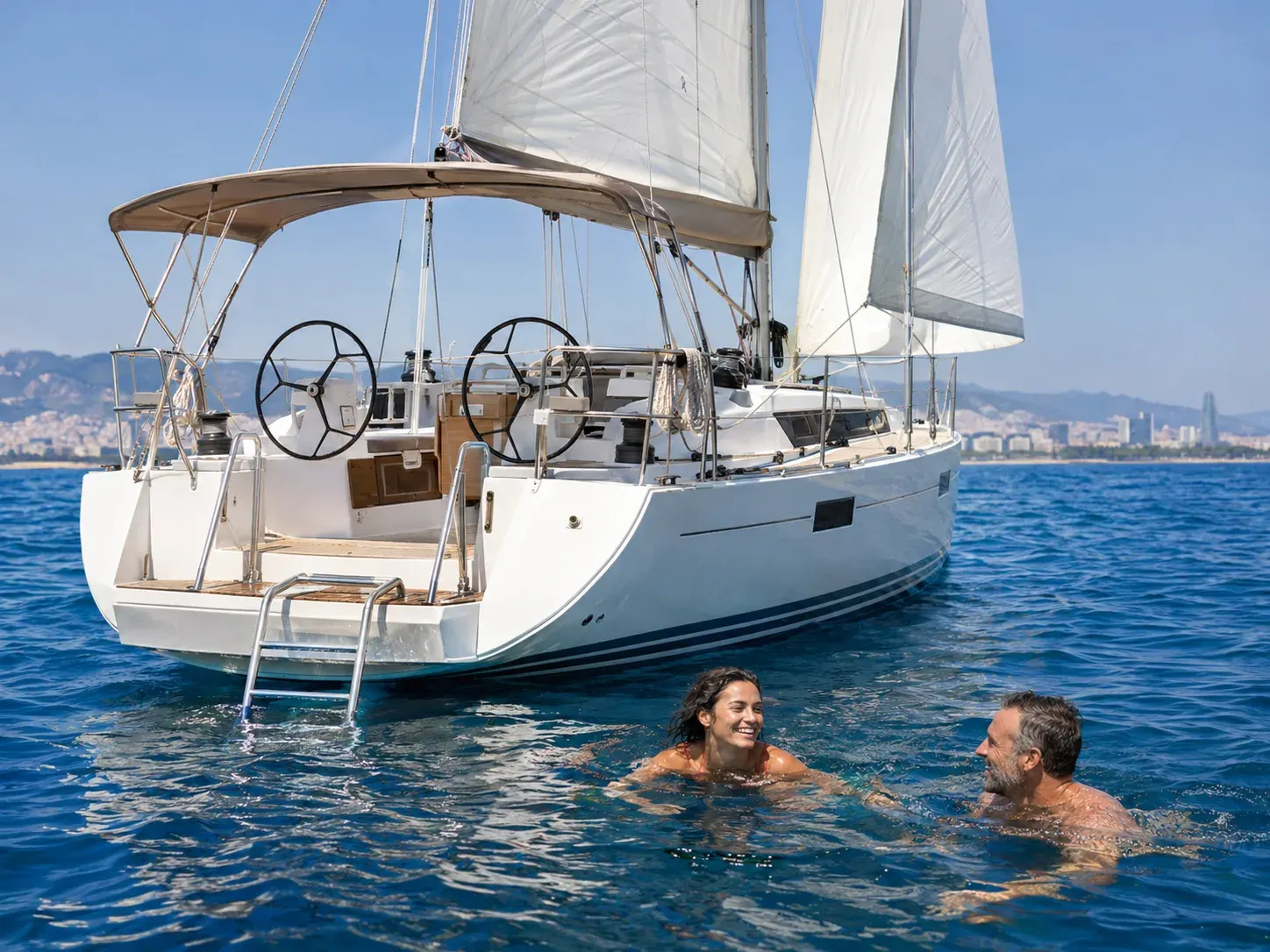
If a swim happens, which always depends on the season, the sea and the skipper’s safety call, enter the water gently, stay where the skipper says, and never touch or stand on anything living. See our guide to swimming during a boat tour for how swim stops work.
Good to know: Smoking on deck is a common source of litter at sea, because ash and cigarette ends blow away before anyone notices. Ask us before your trip about the rules on board.
The Mediterranean marine life you may see
Seagrass meadows
One of the most important habitats in the Mediterranean is Posidonia oceanica, a slow-growing seagrass that forms underwater meadows in clear, shallow water. It shelters fish, helps keep beaches stable and stores carbon. It grows along parts of the Catalan coast, though far less of it remains right in front of the city. It is protected across the region, and anchors dragged through it can damage meadows that take many years to recover. This is one reason skippers choose carefully where, and whether, to stop.
Fish and seabirds
Close to the city you are most likely to notice seabirds: large gulls following the boats, cormorants diving for fish and, further out, shearwaters skimming the waves. In clear water near the boat you may glimpse small shoals of fish.
Dolphins
Dolphins are sometimes seen off the Catalan coast, but sightings near Barcelona are uncommon and never guaranteed. If they do appear, the right response is to stay calm, keep the boat at a respectful distance and let them come and go on their own terms.
Jellyfish
In some summers, jellyfish such as the mauve stinger drift close to the coast. They are a natural part of the sea. Skippers keep an eye out for them before any swim, and if you spot one, tell the skipper rather than trying to touch it.
The waterfront, then and now
The water in front of Barcelona has changed a great deal in living memory. Before the city was opened up to the sea for the 1992 Olympics, much of the coast was industrial, and the regeneration of Port Vell and the beaches gave residents and visitors a new relationship with the Mediterranean. Keeping that water clean is something everyone who sails here shares. Our coastline guide describes what you see along the shore today.
What we can and cannot say
When it comes to sustainable sailing claims, we prefer honesty to green slogans. On this website we do not claim certifications, offsetting schemes or eco awards. We can tell you that our trips are on sailing boats run by a skipper, that sailing uses the wind for much of the time on the water, and that we ask every guest to follow the habits on this page.
If you are booking for a company or another organisation and need specific environmental information, ask us on WhatsApp and we will answer what we can in writing. You can also read more about who we are on our about us page.
Choosing a lower-impact boat tour in Barcelona
A few booking choices also help. A shared sail puts more guests on one boat, so each person accounts for a smaller share of the trip’s footprint. Getting to the meeting point by public transport is easy: metro L4 to Barceloneta, then a short walk to Plaça de Pau Vila. And a calm, slower sail usually means more time under canvas and less time motoring, so tell us if a relaxed pace suits you.
If you want a deeper feel for how the boat uses the wind, ask the skipper to explain the sails during the trip. Guests need no experience, and understanding the sea breeze makes the quiet hours even better.
A short checklist for your sail
- Mineral sun cream, applied before you board.
- A hat with a strap and a light long-sleeved top.
- A refillable water bottle.
- A small bag for your own rubbish.
- Nothing thrown, dropped or blown overboard.
- Calm, distant respect for any marine life you see.
Sustainable sailing in Barcelona is not complicated. It is a quiet boat, a clean deck and guests who leave the sea as they found it.